

With a budget of €4,6M, the ROSAS project (2025-2028) brings together 8 EU countries and the United Kingdom to develop AI-augmented aerodynamic simulation tools to accelerate aircraft design and reduce costly physical testing.
What is Computational Fluid Dynamics (CFD)?
CFD is the process of numerically simulating fluid and gas flows by solving systems of equations modeling the physics and implemented on powerful computers. It integrates complex phenomena as turbulence, aerothermal transfer and reactive flows.
A challenging and ambitious objective is to provide robust and cost-effective predictions for complex industrial-like configurations with accurate representation of key flow features to guide design optimization.
- Scope: turbulence, shocks, off-design, etc.
- Methodology: combination of High Fidelity (HiFi) advanced algorithms and models with AI on High-Performance Computing (HPC)
- Outcome: better performance with lower cost/time
Why does CFD matter?
- Design methods drive cost, time-to-market, and environmental performance
- CFD is one of those methods
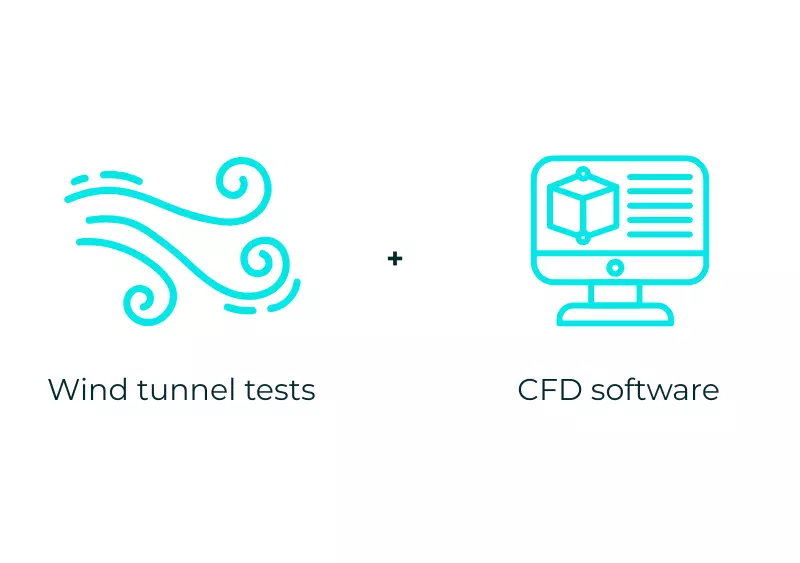
Hybrid numerical/experimental workflows (CFD + tests) accelerate the life cycle.
ROSAS' ambition
Pioneering third-generation CFD tools to:
- Push the limits of robust design
- Contribute to the aviation sector’s digital and
green transition - Create a bridge academia ↔ industry
ROSAS will enable the industry to explore and evaluate innovative aircraft and engine concepts and designs more effectively.
Pathways
Science pathway (to TRL 4)
- Dissemination of results to the community for TRL increase and tool improvements.
- Teaching & training: integrate outputs into graduate/PhD courses, webinars.
- Supports the industrial and legal paths.
Legal pathway
Engage policymakers & certification for virtual certification confidence
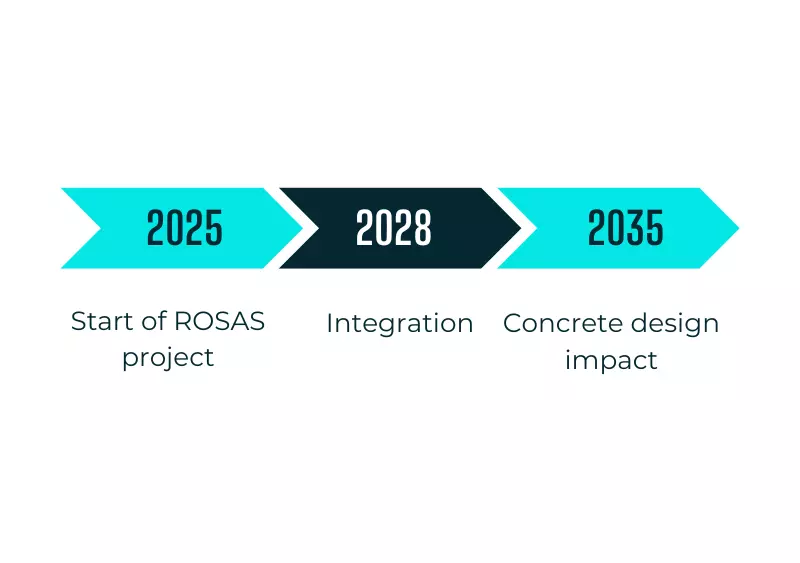
Impacts
Examples of environmental impacts
- Fuel burn reduction via better modelling
- Reduction of non-CO2 emissions by evaluating mitigation strategies
- Reduction of NOx emissions by optimisation of engine design
- Noise pollution reduction: −10 dB targets
Example of economic impacts
The aeronautical industry will clearly benefit from the research, where it has been estimated
that a 5-10% of efficiency in manufacturing can be obtained using advanced CFD-ML methods.
- Faster and more efficient development of new aircraft designs
- Shorter development cycles and more innovative designs optimised for performance, efficiency, and cost-effectiveness
- Help European companies to lower their operating costs